25 Jul
Community
Your bin called in sick
When sickness hits, your bin catches it too
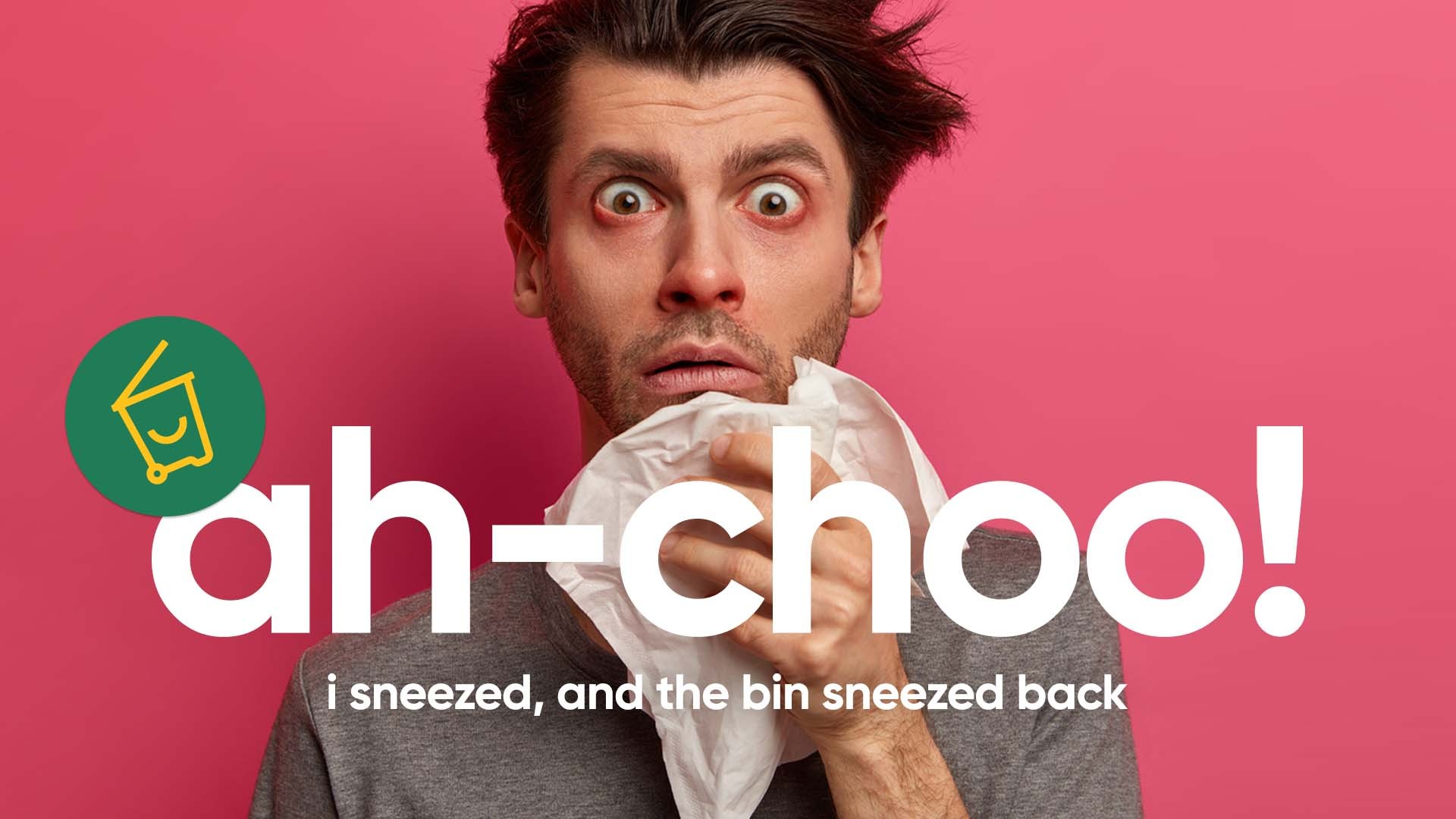
Winter sniffles don't just spread to people; they spread to your bins too.
When winter arrives, many of us look forward to cosy nights, warm drinks, and staying indoors. But it’s also the season when colds, flu, COVID-19, and other respiratory illnesses are much more common. As viruses spread more easily, families, schools, workplaces, and communities often see more people getting sick.
Sneezing is one of the main ways these illnesses spread. While sneezing helps clear irritants from your nose, it also sends thousands of tiny droplets into the air. These droplets can land on people and surfaces nearby in just seconds. Things like door handles, light switches, kitchen benches, phones, TV remotes, steering wheels, shopping trolleys, and children’s toys can all get contaminated if someone sneezes without covering their mouth and nose.
Even if you catch a sneeze in a tissue, the germs are still there. The tissue holds mucus, saliva, bacteria, and viruses. After using a tissue, people usually throw it right away and wash their hands well. Leaving used tissues around or in your pockets makes it easier for germs to spread to others.
During a cold, it’s easy to use dozens of tissues each day. When you add empty medicine packets, blister packs, cough syrup bottles, throat lozenge wrappers, disposable masks, wipes, cotton buds, and other waste, the rubbish bin ends up holding much more than just regular scraps in winter.
Each time you open the bin, more contaminated rubbish goes in. If a rubbish bag leaks or tears, moisture and residue can stay inside the bin long after collection day. Over time, this grime helps bacteria grow and causes bad smells. When food scraps mix with used tissues and other waste, it can make things worse by creating a perfect spot for bacteria, mould, and pests.
Most people wash their hands often in winter, wipe kitchen benches, disinfect bathrooms, and clean things that get touched a lot. But the rubbish bin is often forgotten. It holds all the waste from sick people but usually doesn’t get the same care.
A dirty bin won't always cause illness, but a clean bin always supports better hygiene.
A dirty bin might not make you sick by itself, but it can lead to poor hygiene in the community, at work or at home.
Cleaning your bin regularly gets rid of grime, sanitises surfaces, removes bad smells, and keeps flies and other pests away. A clean bin is nicer to use, helps keep our areas clean, and stops the bin from sneezing back!


Dirty or smelly wheelie bins?